

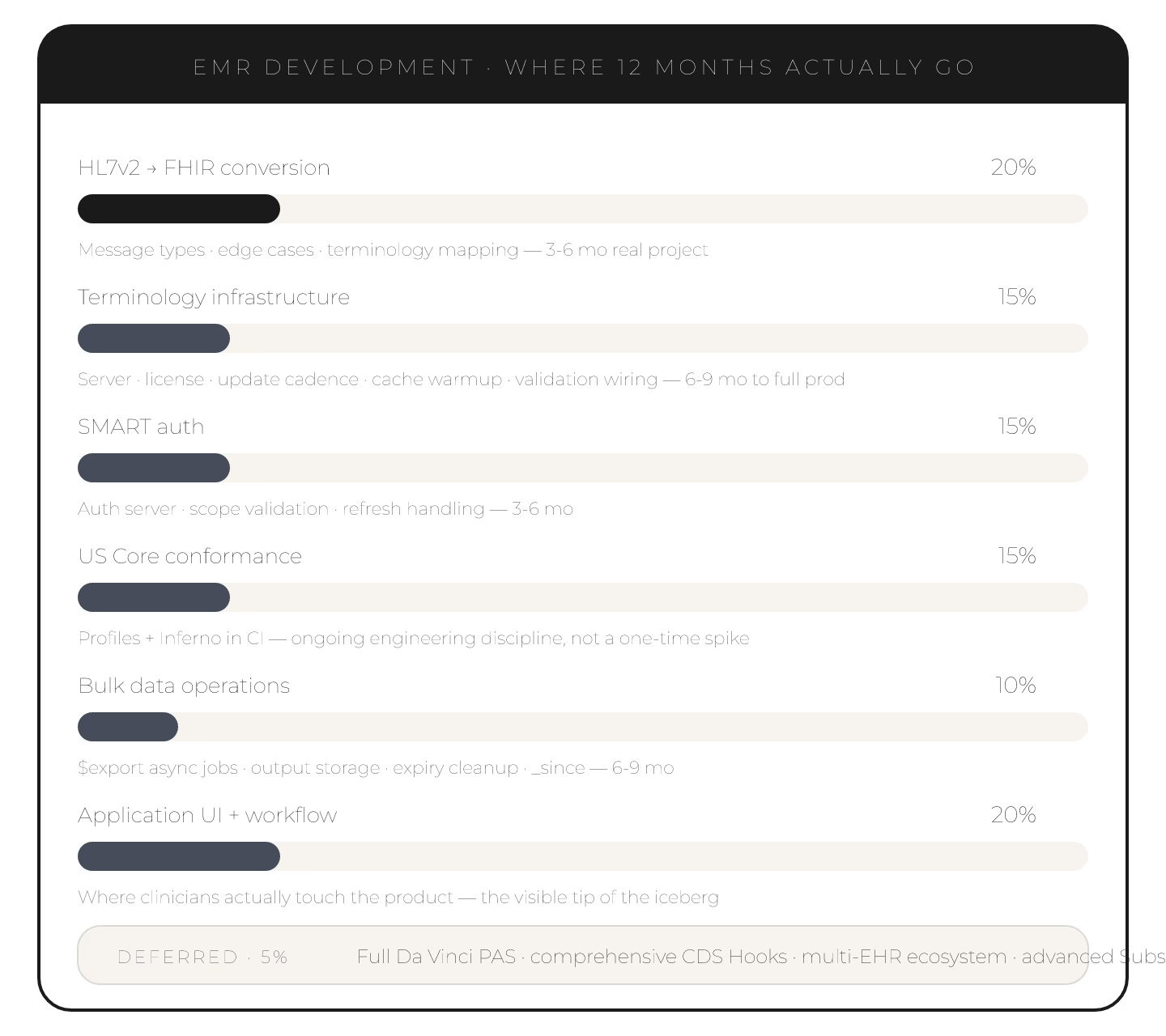
EMR development in 2026 concentrates on specific engineering challenges that shape delivery timelines. Understanding where the real work lives shapes team investment.
Challenge 1: HL7v2-to-FHIR integration. Most upstream data is HL7v2. Building or configuring a converter that handles all message types, edge cases, and terminology mapping is a real 3-6 month project. See HL7v2-to-FHIR IG.
Challenge 2: Terminology infrastructure. FHIR terminology requires: server, license management, update cadence, cache warmup, validation wiring. 6-9 months to full production.
Challenge 3: SMART auth integration. SMART on FHIR auth server + scope validation + refresh handling. 3-6 months.
Challenge 4: US Core conformance. US Core profiles conformance testing via Inferno in CI. Ongoing engineering discipline.
Challenge 5: Bulk data operationalization. Bulk Data IG $export infrastructure: async jobs, output storage, expiry cleanup, _since support. 6-9 months.
Investment breakdown (typical 12-month project)
| Area | Percentage |
|---|---|
| HL7v2 conversion | 20% |
| Terminology infrastructure | 15% |
| SMART auth | 15% |
| US Core conformance | 15% |
| Bulk data | 10% |
| Application UI | 20% |
| Deferred (Da Vinci, CDS Hooks) | 5% |
Deferrable to later phases
1. Full Da Vinci PAS implementation. 2. Comprehensive CDS Hooks integration. 3. Multi-EHR ecosystem integration. 4. Advanced Subscription delivery. 5. Custom profile extensions.
Team skills required
1. FHIR spec fluency (all team). 2. HL7v2 integration engineering (1-2 people). 3. Terminology understanding (1 person + admin support). 4. Auth/security expertise (1 person). 5. Backend engineering (all team). 6. DevOps/observability (1-2 people).
Common execution mistakes
1. Skipping HL7v2 investment → data quality issues. 2. Terminology as afterthought → drift. 3. Custom auth → SMART incompatibility. 4. Missing bulk data → CMS-0057 delayed. 5. No CI conformance → regression risk.
EMR development in 2026 is a real engineering discipline. Sites budgeting for the five challenges above ship reliably; sites underestimating them re-plan multiple times.
