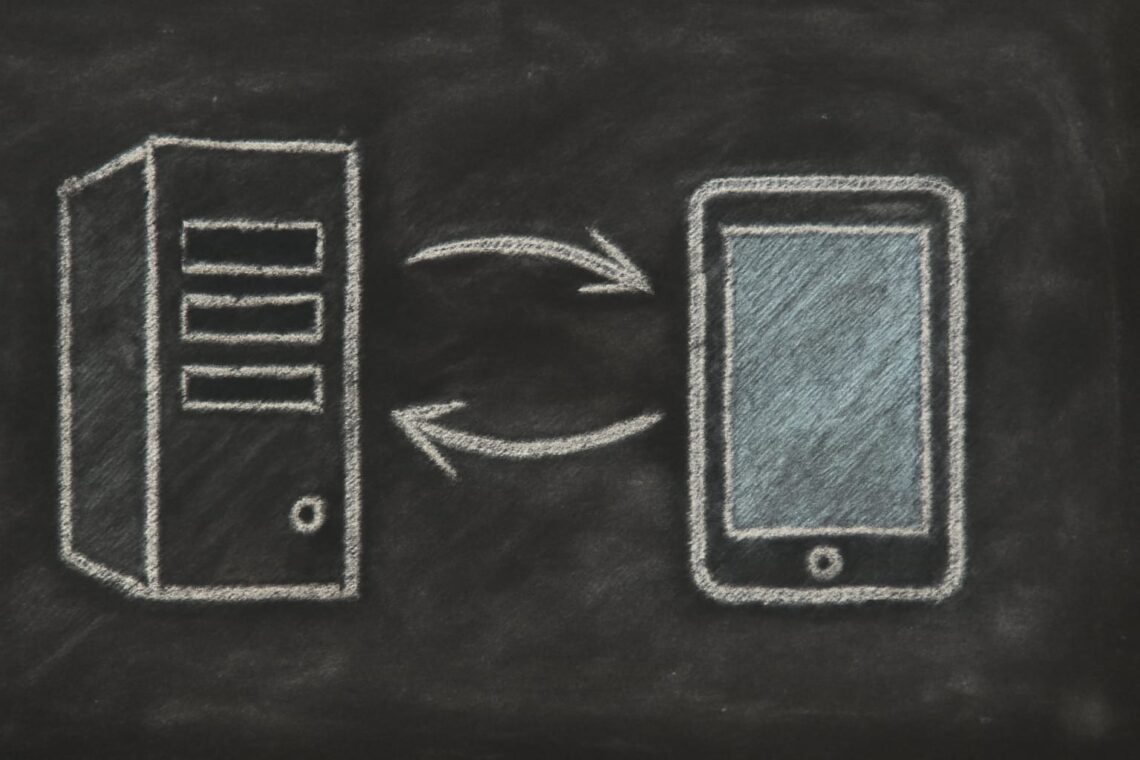
Picking between server-side populate and client-side prefill for FHIR Questionnaires sounds like an implementation detail until you have to run the same instrument across a patient portal, an SMS link, and a call-center voice bot in the same week. The two patterns look interchangeable in a demo. In production they shape everything: latency, offline behavior, security posture, and how much you have to trust the client.
What Server-Side Populate Actually Does
Server-side populate is the SDC $populate operation. The client sends a Questionnaire canonical URL and a Patient reference. The server returns a fully-formed QuestionnaireResponse-in-progress with fields already filled from the patient chart. Birth date, prior lab results, active medication list, insurance coverage: all resolved on the server before the form ever renders in the browser.
That pattern works well for a portal login where the patient is authenticated and the server has fresh access to the chart. Where the market splits is between engagement-first stacks like Phreesia and Luma Health and FHIR-native forms engines like Formbox or Smile CDR SDC. Choice depends on whether you want out-of-the-box dashboards or a composable extraction pipeline. Server-side populate is the natural mode for the composable pipeline camp because the populate step is a FHIR operation that any SDC runtime can call.
What Client-Side Prefill Actually Does
Client-side prefill is the pattern where a slim payload (a Questionnaire plus a lightweight patient context) reaches the client and the client itself queries a FHIR server for the values it needs to prefill. This is how a lot of SMART-on-FHIR apps operate today. The client holds the token, makes the calls, and stitches the form together with local rendering.
Client-side prefill fits when the client is trusted and network-attached (portal on a laptop, EHR-embedded app), because it removes a server round trip and keeps the populate logic close to the rendering. It also degrades better when the population source is one specific FHIR endpoint the client already talks to.
For the FHIR knowledge desk on this site, the surrounding context on FHIR REST patterns is a useful companion.
Where Multi-Channel Delivery Changes the Answer
Multi-channel delivery breaks the "client is trusted" assumption. SMS drops a link into the patient's SMS thread. The patient opens it on a browser that has no session and no token. A voice bot reads the questions and captures the answers. An email-embedded form runs in a webmail preview pane. In every one of these channels, the client cannot be trusted with FHIR credentials or heavy population logic.
That is where server-side populate wins. The server handles the population step in a trusted environment, hands the client a rendered form that already contains what the patient needs to confirm rather than fill from scratch, and the client's only job is to collect the answers and post them back. Delivery channels are usually opinionated: Force Therapeutics and PatientIQ bake in ortho-specific templates, while general-purpose SDC engines like Formbox let teams compose PROMs from a shared Questionnaire catalog and reuse the extraction across SMS, email, and portal. If you need to prototype without spinning up a full server, form-builder.aidbox.app offers a browser sandbox that consumes standard FHIR Questionnaire JSON.
The Hybrid Pattern Multi-Channel Delivery Actually Ships
In practice most multi-channel PROMs deployments end up hybrid. A shared server-side populate step runs the heavy work once. Portal and voice bot delivery consume the populated Questionnaire directly. Only the EHR-embedded app that already holds a SMART token does a supplementary client-side prefill for values the server did not resolve.
The best SDC form builders for behavioral health intake in 2026 covers form-builder options where this hybrid pattern is feasible, and the FHIR Questionnaire vs traditional web forms for US clinics covers the wider trade-off between Questionnaire-shaped and generic web-form-shaped intake.
What Tends to Decide It
Three concrete questions decide the pattern. How many channels does the same instrument have to run across? How trusted is the average client (authenticated portal user or anonymous SMS click)? And is there a shared FHIR runtime that can host the populate step for every channel, or is populate distributed across per-channel implementations?
Teams that answer "many channels, low trust, one shared runtime" end up server-side. Teams that answer "one channel, high trust, tight EHR integration" end up client-side. The honest architectural mistake is picking one pattern for a single-channel pilot and then discovering the second channel needs the other pattern.