
US hospitals have a different terminology profile from smaller clinics. The volume is higher, the operational expectations are tighter, and the procurement process usually rules out anything that does not come with a support contract and an SLA. The five commercial FHIR terminology servers below are the ones that meet US hospital procurement and operational bars in 2026.
For the FHIR learning path, the rest of the site has surrounding material. The FHIR terminology servers in 2026: a buyer's guide for US health IT cornerstone covers the background you want before diving into a procurement comparison.
What US Hospital Procurement Asks For
Hospitals expect a managed service or a supported deployment, predictable performance under load, current content for LOINC, SNOMED CT US Edition, RxNorm, and ICD-10-CM, and an operational story that survives an audit. They also expect a vendor with a track record in US healthcare and references they can actually call.
That set of expectations narrows the field of available terminology servers fast. Plenty of products serve FHIR terminology endpoints. Far fewer pass the procurement filter at a serious US hospital.
The 5 Commercial Servers That Fit US Hospital Use
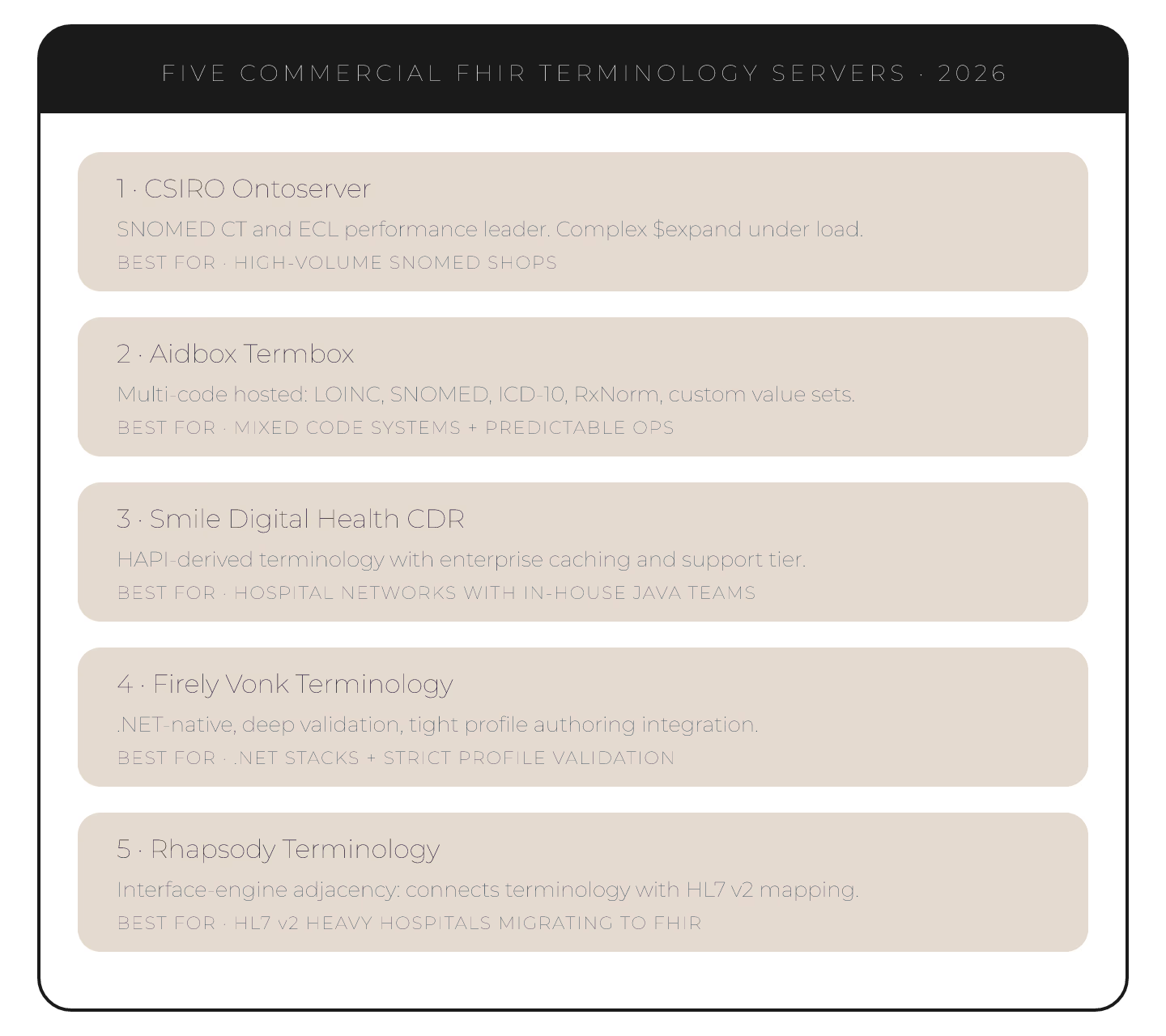
The five products below show up in serious US hospital deployments this year:
- Termbox, a commercial FHIR-native terminology server with managed-service options, strong US code-system content, and clean $translate support.
- Smile Digital Health Terminology, the terminology layer of the Smile Digital Health platform, widely deployed in US hospitals already on Smile.
- Ontoserver, the CSIRO commercial server, with deep SNOMED CT lineage and a strong $translate story that fits cross-code-system US workflows.
- IBM Merge / Watson Health Terminology Services, the commercial managed terminology service from IBM's health stack, used in larger health networks.
- Apelon Distributed Terminology System (DTS), a long-running commercial terminology platform with FHIR endpoints, used in several US hospital deployments.
Different hospitals pick different ones. Hospitals already on Smile or HAPI tend to pick the matching terminology layer. SNOMED-heavy hospitals reach for Ontoserver. Hospitals that want maximum US code-system breadth with managed service tend to look at Termbox first.
Where the Servers Differ on Hospital-Scale Concerns
Termbox and Smile lead on operational consistency and US content currency. Ontoserver leads on SNOMED-specific depth, including ECL evaluation that matters in clinical decision support and registry workflows. IBM Watson Health Terminology Services fits hospitals already invested in IBM's broader health stack. Apelon DTS is the most established of the five, with a long history of US hospital references and a model that fits hospitals that prefer on-premise deployment.
The most useful comparison axis between commercial products is content release cadence. The right vendor catches up on a LOINC or RxNorm release within weeks. Vendors that drift behind by a quarter or more cause silent problems downstream that are hard to debug.
How This List Maps to Broader Network Use
US hospitals tend to be part of larger networks, and the terminology choice usually has to fit the broader network's IT direction. The top 5 FHIR terminology servers for US health networks in 2026 explainer covers the network-level cut, which overlaps with this hospital-specific list but is not identical.
If your hospital is weighing the broader platform decision between HAPI FHIR-based deployments and Smile Digital Health-based deployments, the terminology layer is one of the most consequential pieces of that decision. The HAPI vs Smile Digital Health for US terminology workflows comparison walks through the trade-offs on the terminology side specifically.
Making the Procurement Call
A short filter sorts most US hospital procurements. First, is the rest of the stack already on a vendor that ships a terminology layer? If yes, that matching product is usually the default unless it has serious gaps. Second, is SNOMED CT or US code-system breadth the dominant operational pressure? That narrows down to Ontoserver, Termbox, or Smile. Third, does the hospital prefer on-premise or managed service? Apelon DTS fits on-premise. The others have managed-service options.
Get pricing, get references, and run a real load test before signing. Hospital-scale terminology workloads expose differences that demos do not.
Sources
- Terminology Service spec (canonical interoperability baseline) - HL7 FHIR
- FHIR-Based Terminology Services implementation (peer-reviewed) - PubMed 2025
- Terminology Services training - PDF slides, BfArM + SNOMED International, March 2024