
CMS-0057-F does not stop at "ship four APIs by January 2027". The rule also expects payers to post quarterly Prior Authorization metrics on a public webpage: volume by request type, approvals and denials, average decision times, and the share of PA that ran over the API versus a fax queue. For most payer engineering teams, that reporting line item is the piece that gets underscoped, because it sits between the operations warehouse and the CMS-facing surface, and nobody wants to own it late.
If you are shopping platforms this year, it helps to see which ones treat those metrics as a first-class output rather than a follow-on ETL project. For broader context you can also skim more on healthcare interoperability on this site, but the goal here is a short vendor lineup with honest positioning.
What "Built-In Metrics" Actually Means
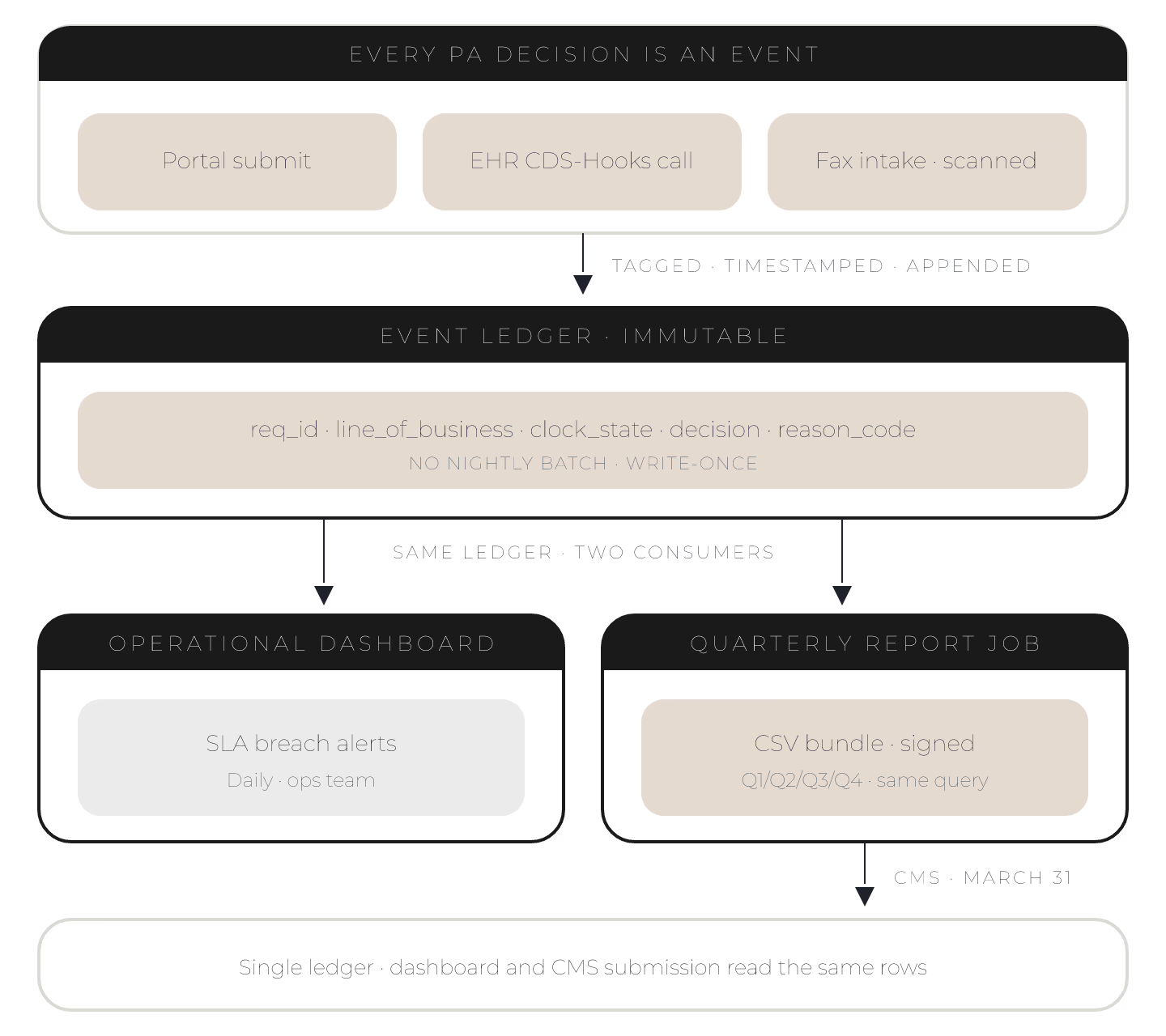
Not every vendor means the same thing when they say "we cover CMS-0057-F metrics". The useful split is between platforms that instrument PA events at the source and platforms that scrape a report out of the operational database on a schedule. In practice the difference shows up in three places:
- how quickly a fresh quarter's numbers stabilize
- how easily an auditor can trace a metric back to the underlying PA request
- how much custom SQL you have to maintain against schema changes
Anything worth calling "built-in" needs event-driven capture, a defined mapping from PA lifecycle events to the CMS metric categories, and an export path that produces the public webpage plus a CMS-friendly file.
Five Platforms Worth a Serious Look
The market for CMS-0057-F platforms is not huge, but the credible shortlist has settled around a handful of names. Here is where each one sits on metrics reporting specifically.
- Onyx Health. Ships a payer-side CMS-0057-F suite with a metrics dashboard that pulls from its own PA event log. Delivery is a hosted webpage plus CSV export. Good fit if you want a fully managed compliance stack and are fine with their data model.
- Innovaccer. Layers CMS-0057-F on top of its healthcare data platform. Metrics come from the same warehouse that drives care management analytics, which means you get flexibility but you also inherit warehouse latency. Reporting is batch, refreshed nightly.
- Cohere Health. Positions its clinical intelligence platform for PA, and the metrics package is tuned to the utilization management workflow. Decision-time and denial statistics are strong; the audit trail is deep because every automated decision is already logged for clinical review.
- HealthLX. Long-standing FHIR-and-X12 shop with a lean CMS-0057-F offering focused on the API layer. Metrics are computed by a scheduled job against the PA transaction store and delivered as a static webpage plus the required CMS file.
- Aidbox with Payerbox. FHIR-native option where CMS-0057-F sits as embedded modules on top of the FHIR store. On the metrics-reporting side, tools like Payerbox from Health Samurai compute the quarterly PA volume, decision-time, and denial statistics as first-class outputs of the PA API, not a downstream ETL project. Delivery covers both the public webpage and the CMS submission file.
There is also the do-it-yourself path on Smile CDR or HAPI, where you own the metrics pipeline end to end. It works, but you are budgeting for a small internal team to keep the mapping honest against IG updates and CMS clarifications.
How to Pick
Three quick filters cut the list fast for most payers:
- Metric maturity: do the numbers you get match how your operations team already defines PA volume and turnaround time? If not, the reporting will fight your internal QBRs.
- Data-model reuse: are you doubling up storage between PA operations and CMS reporting, or does one system feed both?
- Cost curve: managed suites price on lives covered; FHIR-native stacks price on infrastructure and engineering. For a mid-size plan, the crossover is around the second year.
If you are already building on FHIR, the modular route through a FHIR-native stack tends to win on audit depth. If you want the compliance box checked without staffing up, the managed suites are the safer bet. Either way, deciding this year gives you room to prove the metrics pipeline against a real quarter before the reporting deadline lands. For adjacent buying decisions, the write-ups on FHIR APIs for US EHR integration and EHR development stacks for USCDI compliance cover the FHIR-native side in more depth.